Showing posts with label taste test. Show all posts

Saturday, August 31, 2013

Day 376

JAPAN - FOOD FOOD FOOOOOD

You probably know this about me, but I love food.  I LOVE IT.  Now I don't have an instagram and I don't have any fancy filters to make my food look crazy cool, but I think I'm making up for that in weirdness.  I tried a lot of foods in Japan.  Some were strange, some were good, some were awful.  I love trying new foods!  I'll try to describe all the foods, and rate them from 1-10.

These were popped pieces of rice covered in cheap chocolate.
2/10

Matcha milk is surprisingly good!  It's milky but not too sweet.
Also, you have to label all your food in a hostel.  Or else.
7/10

I tried some dango, which is a popular food made from glutinous rice powder.  They're basically the same as the rice cakes in Korea.  The rice balls themselves are flavorless, so dango is put on a stick and covered in something to give it flavor.  (In Japan, the bun hairstyle is called 'dango' because it looks like the food.  In Korea, they call it 'dung,' because it looks like poop.  I think I'll stick with 'dango,' thank you.)

Dango!  These dango were in some sort of sesame sauce.  It wasn't very sweet, but it actually tasted pretty good.
5/10

They're rice cakes on the inside, so the only flavor is the sauce.

Sushi variety.  Cheap and simple.
7/10

Okinawan fruit called Goya.

It's very bitter, and is used in stirfrys.  

Apparently it's really good for you, but... ew.
0/10

Here's that Okinawan sugar candy that the old ladies kept feeding me.  It's called 'kurozato' (which means 'black sugar') and it's made from sugar cane.  It's made by boiling down the juice of the sugar cane and adding a wee bit of lime.  Because it's not very refined, it apparently has some health properties?  I'd take that with a grain of salt.

Pretty tasty... for the first few bites.  After that it's too much.  8/10
Photo from kyotofoodie.com.

There's a lot of variety in appearance!
Photo from okinawatourism.ti-da.net.


And of course, the alcohol.  I love how cheap traditional alcohols are in Asia.

These are traditional Japanese liquors!

They have unusual lids.

This is awamori, the traditional Okinawan liquor.  It tastes exactly like water, and barely has an aftertaste.
Honestly, you could probably pass this off as water if you gave it to an unassuming person.
2/10

This is sake of some kind.  It was milky and had goopy chunks in it.  Bad bad bad.
-2/10

I kinda went crazy with the candy at the grocery store.  All this stuff was less than 75 yen (about $0.75) so I didn't feel guilty about buying any of it.  Let's go counterclockwise from top left.

Awww yeah variety.

Okay, first up, top and left, is the cheeseburger-flavored snack.  It didn't taste like a cheeseburger as much as it tasted like cheesy chili fries.  There were four or five of the flat, round crisps inside.  This bite was the only bite I took.  They made me feel bad inside.

Cheeseburger chip: 1/10, would eat if I were stranded and this was the only edible thing I had.

Next up was this apple-shaped thing.  It came in a few other highlighter colors but the green looked the most appetizing/least toxic.  I thought there would be an easy-open pull tab or something, since these are for kids, but I ended up having to cut it open.  I thought it would be a juice inside, but it was actually more like extra-gummy green jello.  It wasn't apple flavor, or any other flavor I'd normally associate with the color green.  (You know, like lime, or... are there other green flavors?)  Kinda gross.

Too solid, weird flavor.  1/10.

Next up, these little cuties!!!  So cute!!!  Inside each one was a little bag of BB-sized chocolate balls.

Awww!  Chocolate balls get 7/10.  Packaging gets 10/10.

I somehow lost that long strip in the middle and never got to try it, but next up is the chocolate pancake sandwich.  It's two tiny round pancakes with a chocolate-flavored gel in the middle.  The chocolate flavor is not doing such a great job of imitating the chocolate.  The pancakes were soft though.

Weird fake chocolate flavor.  3/10.

Next up: mochi.  The brand name is mochitto, which sounds adorable.  Mochi are Japanese rice cakes with filling.  The red letters next to the price tag say that this particular one is ichigo (strawberry) flavor.

Mochitto are kinda cute.  Look at their little bunny logo!

It's a little flour-colored ball that appears to be covered in cornstarch.

Strawberry filling on the inside!  Pretty good, but very sweet.
8/10
There's also a 'purin' flavor.  'Purin' is the Japanese word for 'pudding.'  Little cups of flan-like pudding were popular and cheap, and I ate a lot of them.  This purin mochi wasn't great.


Not as good as the strawberry flavor.
5/10

Next up is another type of dango.  Dango and mochi can look very similar.  The difference is that  mochi has filling inside, but dango doesn't.

No filling.  I can't tell if it's cornstarch or powdered sugar on them.

Stoplights!  I couldn't really tell if they were different flavors, they were just very sweet.
4/10

The other stuff in the photo: the blue bag had chocolate-covered peanuts, and the pikachu block was basic chewing gum.

This looks like an ice cream cone, and looks is the key word here.  This was not frozen, or even refrigerated.  It comes in a bag.  The 'cone' is actually a very thin piece of flavorless, edible cardboard.  I have no idea what that stuff in the cone is, but it ain't ice cream.  It had the consistency of beaten butter or warm whipped cream.  It also kinda tasted like beaten butter.  So wrong.  Why, Japan, why would you make this?

Looks are deceiving.  -5/10

I've already shown the Okinawan tacos on another post, but here's another look:
The vending machine where you order the Okinawan taco.


Many of the buttons are the same.

The Okinawan taco looks like it was made by someone who had only heard a vague description of a taco.  It's rice on the bottom, meat and shredded lettuce, topped with crushed Doritos.  It's pretty good!

Yum!  10/10!

You can order with bacon (actually just ham, pictured below), cheese, eggs, ketchup, and/or avocado.  
Why is 'bacon' never bacon outside of America?  Is it really so hard to make it a little crispy?

Within 24 hours of getting into Japan I had eaten ramen twice.  I had just gotten into the country and was hungry, so my first was a bowl from Family Mart (the ubiquitous convenience store of Japan and Korea, although it's called CU in Korea).  And it was gross.   Like, so gross that I took it outside and dumped it.  I think it was fish flavored.  I also had green tea chocolates that were gross, and a purin (pudding) cup that was the only saving grace of my dinner that night.


Green tea chocolate: 1/10, I gave this away.
Ramen: 1/10, what the heck, this was nasty!
Pudding (actually it says "custard"): 10/10, delicious!

The next day, after touring the Narita-san temple and doing a spot of shopping, I found a real ramen restaurant and ordered soy sauce ramen with pork and a side of gyoza (dumplings).  SOOOO GOOOOOD.  That ramen noodle block that comes in a plastic bag bears zero resemblance to this masterpiece of fine food.

So much flavor... and sodium, probably.  That pork was delicious.
Everything in this photo gets a 10/10.

If you're my friend on facebook, you've probably seen my Kit Kat photos.  Japan is famous for having a lot of strange and unique flavors of Kit Kat chocolate bars, but they seem to be sold only at the airport.  I am not proud of the amount of money I spent on Kit Kats in Japan.   I bought every flavor they had, which was five.  (Actually that's not quite true... there was a sixth flavor, dark chocolate, they I had already tried and it wasn't anything worth writing home about.)

Ichigo (strawberry) flavor, easily my favorite.  10/10.

Green tea flavor.  5/10.
It has a strange taste that I don't care for but everyone else seems to love.  This was the favorite among my coworkers.

Green tea and cherry blossom flavor.  8/10.

Passionfruit flavor.  0/10, ew.

Blueberry cheesecake gets 3/10.  On top of green tea cherry blossom.

So for those who can't read, that was:
1) Strawberry
2) Green Tea
3) Green Tea with Cherry Blossom
4) Passionfruit
5) Blueberry Cheesecake

There's also that dark chocolate flavor but it was boring so I didn't bring it home.

The blueberry cheesecake is missing from this photo.

The green tea flavor got a bit melted.

The strawberry flavor is by far the best.  The green tea/cherry blossom flavor is second, and green tea comes third.  Blueberry cheesecake is okay, and passionfruit is downright bad.  No really, it's gross.  That's why I'm giving it away to my students.

And now, I've saved the best for last.  In Korea they sell these cute little coffee drinks that are about 5% coffee.  My favorite is the mocha flavor, which is like chocolate milk with juuuuust enough of a hint of coffee that I feel okay about drinking it in the morning.  Unfortunately there were no mocha coffee drinks in Japan, just regular lattes and whatnot.  However, they did have this, and it was the best thing ever:

OH MY GOD SO AMAZING.
10000/10.

This is a mint chocolate chip ice cream drink.  Actually it says "chocominto dorinku", or "chocolate mint drink," so they're not even pretending that it's a coffee drink.  It tastes like a melted milkshake made of Baskin Robbins mint choco-chip ice cream.  I must have had ten or fifteen of these while I was here.  They were so refreshing and addictive!  I'm kind of glad they don't sell them in Korea because I think I'd become poor, fat, and diabetic from drinking these constantly.

I think that sums up most of the interesting foods I ate or attempted to eat/put into my mouth while in Japan!

Cheers,
Ashton

Saturday, May 25, 2013

Day 279

I promised it a few months back, and it's finally here.

KOREAN ALCOHOLS: PART 2

If you want to read Part 1, click here.  If you're ready for round two, then let's get started with the worst of the worst.  Keep in mind that everything on this list cost less than $3 USD.

Before you ask what I'm mixing this stuff with, here's your answer: I'm not.  Westerners typically mix their liquors with other (non-alcoholic) drinks.  Many traditional Korean alcohols are actually rice wines.  There are apparently some distilled liquors, but I haven't seen them.  Even soju, which is similar to weak vodka, is usually consumed straight.  Occasionally soju gets thrown into other things (like beer), but for the most part, what's in the bottle is what goes down the gullet.


GOLDEN DRAGON

Looks cool!  Technically it's Chinese but whatever.

Golden Dragon is a Chinese liquor that comes in a cool green bottle with a dragon embossed on the back.  I admit it, the dragon suckered me in.  The contents are clear and smell like paint thinner and regret.

Very cool.

As far as the 'taste' goes, it straight up burns.  It's hell inside your mouth, very bitter and acidic.  Have you ever been violently ill and thrown up so much that you started vomiting up yellow-green bile?  Remember the taste of the bile?  Imagine doing a shot of bile mixed with rubbing alcohol.  That's what Golden Dragon tastes like.

I noticed that you can actually watch it evaporate from the glass and leave residue on the sides.  Upon closer inspection, I discovered that it's 50% alcohol.  If you look very closely at the first photo, you can read "50%(V/V)."  I honestly believe that drinking an entire bottle of this would kill me.    To give you a good comparison: the standard ethanol mixture used to fix organic tissue, like those bottles of brains and pig fetuses you see in science labs, is 70%.  This is pretty darn close to what we use to keep samples from rotting.  (Pro-tip: you're supposed to fix tissues AFTER it's dead.)

A translation of the back of the bottle reveals that this stuff is banned from being sold in restaurants and bars.  Can't imagine why.

Score: -5/10
This is the devil's diarrhea.


SWEET BLOOMING 
(MAESIL / 매실)

Pretty bottle, at least.

I've talked about maesil before.  It's pronounced "may-sheel" and it's a fruit wine made from the ripened Prunus mume fruit.  This fruit is called a Chinese Plum, and a Japanese Apricot, and I call it a Korean Plum. But a plum by any other names tastes just as sweet.  In this case, maybe a little too sweet.

The last maesil I tried was awful.  (Not as awful as Golden Dragon, but bad enough to dump the whole bottle immediately.)  This was a definitely improvement, which was unexpected because this one was cheaper.  The plum wine was a pleasant orangey-yellow, and looked a lot like my favorite tea.  It smells like a mildly alcoholic cherry juice.  Unfortunately, it tastes exactly like cherry cough syrup mixed with cheap vodka, complete with the bad cough syrup aftertaste.  I could enjoy this if it weren't for that horrible aftertaste--just like cold medicine!  This stuff is 14% alcohol.

Score: 3/10
Possibly enjoyable if you had a cold.


LET'S SPARK
(MAESIL / 매실)

Pretty bottle.

This is another maesil (plum wine), but it's slightly carbonated.  It's more yellow (the Sweet Blooming was more orange), and it's also a lower alcohol content than Sweet Blooming, at just 10% alcohol.  The flavor isn't very strong, but there's no bad aftertaste.  It still tastes cherry-ish, but not outstandingly so.  It's not super sweet, which is good.  I could actually drink this and enjoy it.

Score: 5/10
It could have a stronger flavor, but it's actually drinkable.


DEODEOK MAKKOLI (더덕 막걸리)
(Traditional Rice Wine)


Fancy!

Makkoli is a traditional Korean rice wine.  (It's also spelled 'makgeolli.')  This stuff is made from fermented rice and until recently it was basically the moonshine of Korea: cheap, nasty, and usually imbibed by poor farmers.  Lately, though, it's been gaining popularity and there's an abundance of makkolis available.  It usually comes in an opaque white plastic bottle.

As far as alcoholic drinks go, makkoli is pretty healthy.  It's got fiber, vitamins, lactic acid, and it's usually less than 8% alcohol.  You can drink it for a while and only get pleasantly buzzed!  There are makkoli holes-in-the-wall, usually with wooden picnic-style tables and gravel floors, that serve the stuff in bowls and big copper kettles.  Makkoli is often eaten with a Korean-style seafood pancake (pajeon).   It tastes kinda like beer, and it can vary from sweet to bitter to tangy, depending on the brand.  Appearance-wise, it's an opaque liquid the color of pancake batter.  As far as Korean alcohols go, makkoli is pretty good.

See the stuff on the bottom?  Makkoli is an unfiltered drink, so make
sure you shake it before drinking it.

This particular bottle is made from 95% rice, 5% root of the Codonopsis lanceolata plant, which is a local variety of bonnet bellflower called "deodeok."  The plant's root is popular in Korean cooking and apparently has some medicinal qualities.  This deodeok makkoli tastes healthy, for lack of a better word.  Not bad, but it'd be better with pajeon!  

Score: 7/10
It tastes healthy.  I can't decide if that's good or bad.  Makkoli is significantly more enjoyable when imbibed with friends at a makkoli hole-in-the-wall.


Korean Rice Wine


Sometimes I visit the local mart instead of going to the big department store.  I have a few reasons.  First, the mart sells cheap ice cream and chocolate bars.  Second, the night guy is a real peach who thinks my name is pronounced "Action."  Third, all the big stores are closed every other Wednesday due to some law that's supposed to help mom-and-pop shops.  But mainly I go for the ice cream and chocolate.

Anyway, the point is that this mart usually has a small and always-changing selection of cheap alcohol.  Many of my taste-tested alcohols come from this shop.  I usually pick up a new bottle and ask the sajangnim (Korean for "boss") if it's delicious.  "Mashisoyo?"  He usually laughs and nods and says, "Mashiso," which means "It's delicious."  Then I buy it, along with copious amounts of ice cream.

This particular bottle contains a whole liter (that's 1/4 a gallon) of rice wine and it cost just $3.  It's foul.  Honestly, I didn't expect it to be good.  But I think it's too bad to even cook with.  (Makes me miss Australia, where I could get a decent bottle of wine for $4.)

Score: 1/10
Bad.  Just bad.


And last but not least...

Premium Distilled Soju (소주)


Ooooh, fancy.

Soju is the cheapest thing to drink in Korea.  A cheap bottle usually costs around a dollar and most types are about 20% alcohol.  It's dangerous.  And I love it.  It tastes like spicy water!  (Or slightly-sweet rubbing alcohol, take your pick.)

Like the majority of old Korean men, I normally buy the cheap stuff.  I prefer Chamisool brand, but there are a few other popular ones.  They're sold everywhere, even in convenience stores and restaurants.  You can buy big 10-liter jugs at the grocery stores.  But just once, I thought I'd buy a fancy bottle and see if it tasted different.

And did it?  Yeah, but not in a good way.  This fancy soju had all  the tongue-numbing power of cheap soju, but without the slightly-sweet fire-water taste I love.  I strongly suspect that this is better for my liver (and the environment in general) but it's not sweet at all.

Score: 4/10
It's okay, but I much prefer cheap soju!  This tastes like regular old rubbing alcohol.


CONCLUSIONS
Soju is still my favorite of the Korean traditional alcohols.  Soju is better with dinner, while makkoli is great when enjoyed with friends over some hot snacks (like seafood pancakes!)  The Let's Spark maesil was pretty decent, but I'm not sure I'd buy it again.

If I'm being honest, I like rum a lot better than any of the Korean alcohols.  There's a decent selection of Western alcohols at Costco, and the duty-free guys at the airport don't really care if you're over the limit so long as the stuff is cheap.  But for a cheap night of drinking and dining with friends, soju is hard to beat!  

I'll be keeping my eye out for more Korean alcohols to try, and you can also expect another list of strange foods in the near future.  I've only got a few months left, so I have to make the most of it!

Cheers,
Ashton

Wednesday, January 30, 2013

Day 165

One of my hobbies in other countries is to buy foods I've never seen, just to try them out.  Korea has a large variety of snacks and drinks that are new to me, but their variety of alcohols is especially interesting, partly because many of them are delightfully different from anything we have in America.  This is far from a comprehensive list of Korean adult beverages, and I expect to add a few more items to the list in a few months.  So, without further ado, I present...

KOREAN ALCOHOLS: PART 1

We'll start with my personal favorite:

SOJU (소주)

Ah, Soju.  The mainstay alcohol of Korea.  This stuff is potent, very popular with old men, and dangerously cheap.  The alcohol content of soju ranges from 30-80 proof (that's 15-40% alcohol), but I prefer the lower end.  To give you an idea of alcohol content, most vodka is about 80 proof/40% alcohol, and Captain Morgan Original Spiced Rum is 70 proof/35% alcohol.  Drinking soju is basically like drinking straight-up liquor.

Soju is essentially drinkable rubbing alcohol.  Really.  It has a slight sweetness to it, but it tastes like rubbing alcohol.  The crazy thing is that I actually love it!  I think it's delicious.  Soju is cheap, safe for my malt allergy, and ridiculously easy to get--they sell it in every convenience store, including 7/11, for about a dollar.  Some are better than others, and so far my favorite brand is the Chamisool mild, which has a little picture of the sky on the bottle.

Three brands of soju I bought today.  They each cost less than US$1.
My favorite is on the far left.

But how can I truly say that Chamisool is my favorite unless I try others?  Today I bought two 'flavors' of another brand.  One says 'mild' in English; the other is a mystery, though by its red color I'm guessing it's stronger.  In the name of science, I set up a blind taste test with three cups.

Yeah, science!

According to my very reliable two-person study, the red-capped bottle was definitely the worst.  It didn't taste so much like rubbing alcohol, but rather had an odd, harsh bite to it that we didn't enjoy.  Unsurprisingly, it had an alcohol content of 20%, the highest in my 'study.'  There was a tie on the other two flavors.  I prefer the green-cap brand, which has an alcohol content of 19% and a pleasant, slightly sweet smell and taste.  This one tastes the most like rubbing alcohol, but it's sweet-ish.  The blue-cap bottle was Eric's favorite.  It was the mildest but wasn't as sweet as the green-cap bottle, and had the lowest alcohol content at 16%.

(If at this point you're wondering if I only wrote this review as the pretext for getting drunk... well, you're not totally wrong.  But this is a valuable cultural experience!)

But back to business.  Soju comes in a wide range of sizes, from juice boxes to jugs.  The most popular size is a 360ml green glass bottle (above), which can be purchased alone or in a 24-pack.  The largest size I've seen is 10 liters, although the largest size in the photo below is a mere 5L.  So, double that.  I haven't even checked the capacity of the soju jugs at Costco.

Korean old men drink this stuff like water.  It comes in a wide variety of sizes!

The smallest sizes I've seen are the juicebox and plastic flask, which are both 200ml.  These cost less than US$1 each, and they're more convenient than the glass bottles because they're lighter.  When I go out I often bring a flask of soju, just in case we end up in a park or the bar we choose doesn't have anything I can drink.

Imagine if other liquors came in juiceboxes.  Just imagine.

For someone with a malt allergy like me, soju is a lifesaver.  Rum is my drink of choice in America, but it's not popular here.  I can't drink beer or whiskey because they're malted, and most bars here don't list the ingredients of their cocktails in Korean, let alone in English.  This means that I have no idea if something contains a malted liquor, so this is a bit of a danger for me.  Unfortunately, most bars don't sell soju because it's too cheap to be profitable.  My solution?  Smuggle in my own soju.  It ain't classy, but it's cheap and it's saved me from gastrointestinal distress many a night.  I will certainly miss soju when I get back to America!


MAESIL (매실) 


Seoljungmae maesil!

Maesil ("may-sheel") is a Korean plum wine.  The fruit of the Prunus mume is called a Chinese plum or a Japanese apricot.  It's closer to an apricot, but I'm going to call it a Korean plum.  It is apparently a separate fruit from the loquat, which is also called a Chinese plum, but seeing as how I've never tasted either fruit I can't really say how similar they taste.


Apparently a loquat, but they look identical on a tree.
Photo courtesy of genuineaid.com.

Somewhat riper Japanese apricots.
Photo courtesy of eatpress.com.

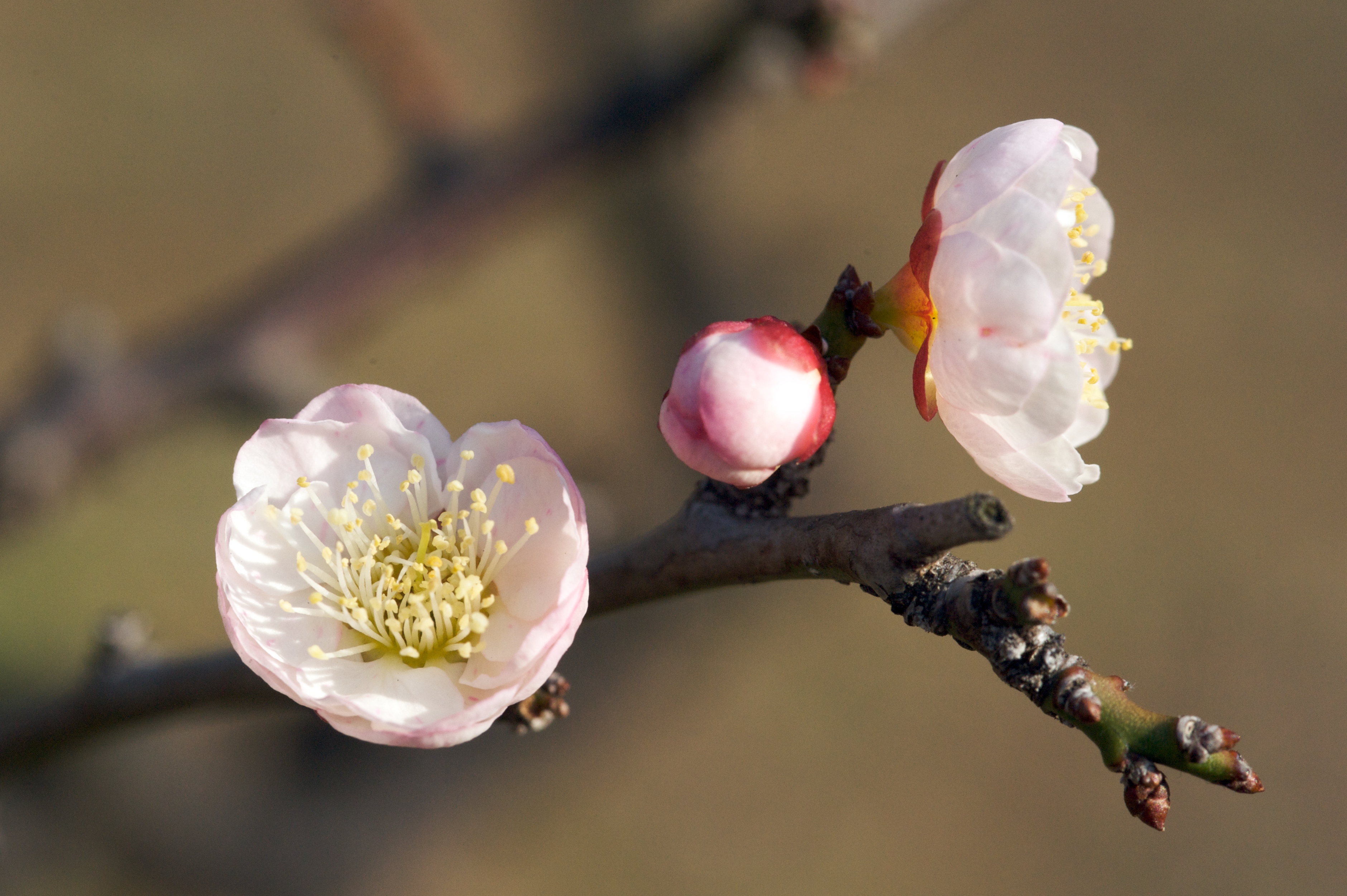
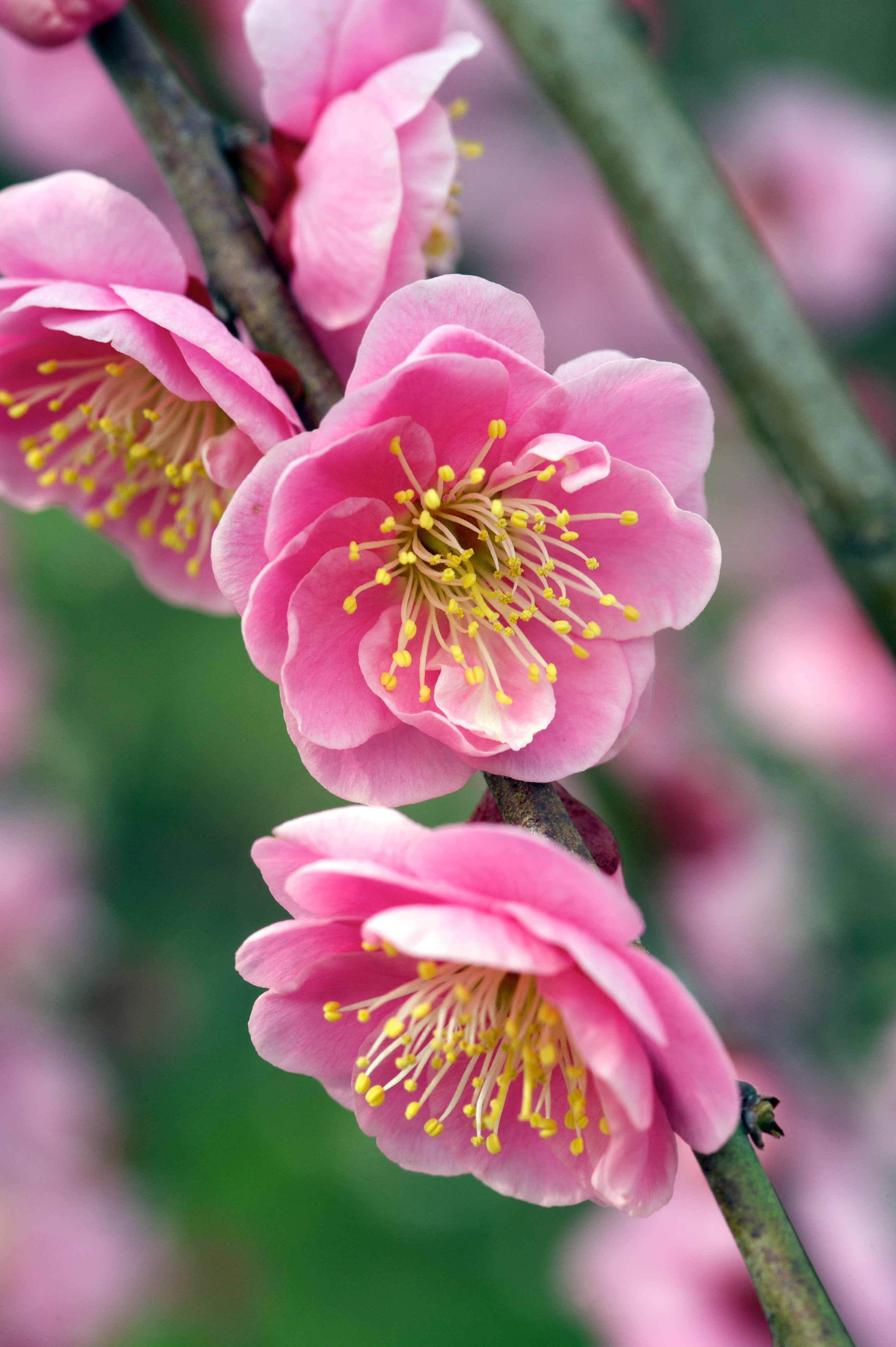
Anyway, this tree's flowers are called plum blossoms, and they bloom in late winter/early spring.  They're apparently very symbolic (although I'm not sure what they symbolize) and greatly loved by the Koreans.


Very pretty.  I'm sure I'll get a few shots of my own in the near future, but this photo was taken by Douglas Triggs.


Douglas, dude, I hope my photos turn out half as nice as yours.

Anyway, back to the alcohol.  I bought the cheapest brand of maesil I could find, which cost about $3.  It's called Seoljungmae (설중매) and it comes in a pretty green bottle.  Inside the bottle are three  Korean plums, which all look very fancy.


Oh, so fancy.

The wine itself is yellow and clear.  It smells like exactly like apple cider.  I also took off the cap to taste the plums.


Is that teacup cute or what?

Looks a bit like an olive.

Ahp, there's a pit.

Unfortunately the maesil tastes like one part apple cider mixed with three parts rubbing alcohol.  It's awful and I can't take a single sip without cringing. (And keep in mind, I love soju, which actually does taste like mild rubbing alcohol.)  The plums were not quite as bad but still awful; imagine biting into a very unripe nectarine that tastes like rubbing alcohol.  This stuff is truly bad all the way around.  


SANSACHOON

This is another fruit wine.  The thing about wine in Korea is that it's all rice wine with fruity infusions; the wines aren't actually made from fermented fruit.  Surprisingly, I kinda like it!  The rice wine tends to be less sharp.  (Is that a real wine term?  I don't drink a lot of wine.)  


Anyway, this stuff is pretty good.  It has a pleasant peachy color and a sweet, soft taste.  It's infused with 'sansa and sansuyu fruits,' which as far as I can tell are apples and the fruit of dogwood trees, respectively.  The fruit of a dogwood tree is called a 'cornus fruit,' and it looks like spiky apples.


Photo courtesy of Wikipedia.

Photo courtesy of Wikipedia.
Not bad, not bad!


BAEKSEJU

This is a fermented rice-based alcohol that claims to be a wine, but tastes a bit yeasty for wine.  The name literally means "one-hundred-years wine," which refers to its 'legendary' life-lengthening abilities.  It claims to have a bunch of herbs and crap that make it healthy.


The story goes like this: A man is walking down the road when he sees a young man, about 20 years old, beating up an 80-year-old man.  The traveler stops and yells at the young man for beating up an old guy, but the young man responds, "This is my son!  I had him when I was eighty years old!  I'm beating him up because he ignored my advice and didn't drink the baekseju, and now he has grown older than me!"

Now, I'm not sure how much of that story is true, but I can tell you this: the stuff ain't bad.  I was expecting a lot worse, but I ended up finishing the bottle.  And if it's healthy?  Sure, sign me up!


CONCLUSIONS

Soju is by far my favorite of the traditional Korean alcohols.  It's tasty, dirt cheap, and can double as a sanitizing agent for cleaning.  The baekseju comes in second, the fruity wine third, and maesil dead last because it's disgusting.

This concludes the first segment of my review of Korean alcohols, but don't worry, I've got another 6 months here and there's so much more to try!  So far I've sent a few juiceboxes of soju back to the States, but nobody has liked them thus far.  Your loss, guys, it's delicious!  :)

Cheers,
Ashton